Difference Between Traditional Concrete and Green Concrete

Difference Between Traditional Concrete and Green Concrete

Ducon green

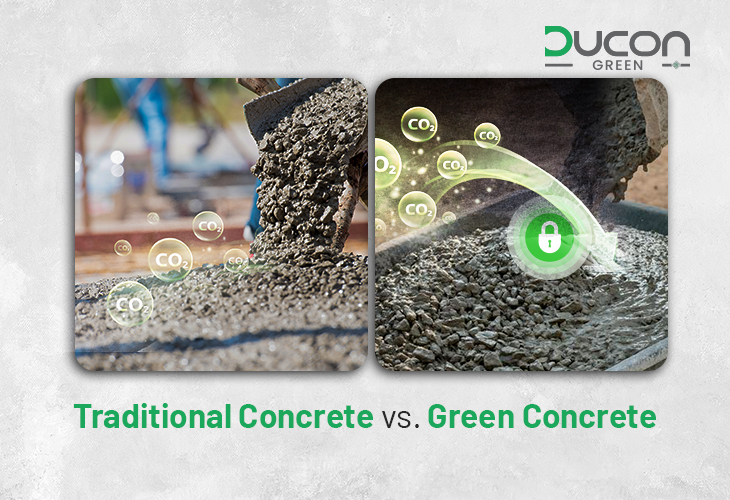
Concrete is the backbone of modern construction, but as sustainability becomes a global priority, the materials used to build cities are evolving. Traditional concrete has long been the industry standard, yet it comes with significant environmental costs. Green concrete, also known as recycled or sustainable concrete, offers an eco-friendly alternative designed to reduce carbon emissions and construction waste.

Understanding the difference between traditional concrete and green concrete is essential for developers, contractors, and policymakers, especially in regions like the UAE, where sustainable construction is a national priority.

What Is Traditional Concrete?

Traditional concrete is the most widely used construction material globally and has been the foundation of infrastructure for decades.

Materials Used in Traditional Concrete

Traditional concrete is typically made from:

  • Portland cement
  • Natural aggregates (sand, gravel, crushed stone)
  • Water

How Traditional Concrete Is Manufactured

The production of cement, the binding agent in traditional concrete is highly energy-intensive. Limestone is heated at extremely high temperatures, releasing large amounts of carbon dioxide (CO₂) during the process.

Environmental Impact of Traditional Concrete

  • High carbon emissions
  • Extensive use of natural resources
  • Land degradation from aggregate mining
  • Significant contribution to global greenhouse gases

Cement production alone accounts for nearly 8% of global CO₂ emissions, making traditional concrete one of the most environmentally demanding building materials.

What Is Green Concrete?

Green concrete is an environmentally responsible alternative designed to reduce the ecological footprint of construction without compromising performance.

Definition of Green Concrete

Green concrete is produced using recycled construction and demolition waste, industrial by-products, or alternative binders instead of relying solely on virgin raw materials.

Materials Used in Green Concrete

  • Recycled concrete aggregates
  • Construction & demolition waste
  • Reduced cement content
  • Sustainable binding materials

How Green Concrete Supports Sustainability

  • Diverts waste from landfills
  • Reduces dependency on natural resources
  • Lowers embodied carbon
  • Supports circular economy principles

Green concrete aligns strongly with UAE sustainability initiatives, including Dubai’s circular economy and net-zero goals.

Traditional Concrete vs Green Concrete - Key Differences

Feature

Traditional Concrete

Green Concrete

Raw Materials

Natural aggregates & cement

Recycled construction waste

Carbon Emissions

High

Significantly lower

Energy Consumption

High

Reduced

Environmental Impact

Negative

Eco-friendly

Waste Reduction

No

Yes

Durability

Proven

Comparable with modern processing

Cost Efficiency

Higher long-term

More cost-effective

UAE Sustainability Alignment

Limited

Strong

Green concrete delivers similar structural performance while dramatically reducing environmental impact.

Environmental Impact Comparison

Carbon Emissions

Traditional concrete relies heavily on cement, a major source of CO₂ emissions. Green concrete reduces cement usage and incorporates recycled materials, significantly lowering carbon output.

Waste Management & Landfill Reduction

Construction and demolition waste is a major environmental challenge in the UAE. Green concrete transforms this waste into usable building materials, helping achieve zero-waste construction goals.

Natural Resource Conservation

By reusing existing materials, green concrete reduces the need for quarrying and mining, preserving ecosystems and natural landscapes.

Strength & Durability: Is Green Concrete as Strong as Traditional Concrete?

Yes. When processed using modern technologies, green concrete is as durable and structurally reliable as traditional concrete.

  • Meets construction and engineering standards
  • Suitable for blocks, pavers, roads, and infrastructure
  • Proven long-term performance
  • Enhanced through advanced recycling and curing technologies

Modern green concrete solutions are engineered to match or exceed conventional strength requirements.

Cost Comparison: Green Concrete vs Traditional Concrete

Initial Cost Considerations

While traditional concrete may appear familiar, green concrete often benefits from:

  • Lower raw material costs
  • Reduced waste disposal expenses

Long-Term Economic Benefits

  • Lower lifecycle costs
  • Reduced environmental compliance penalties
  • ESG and sustainability incentives

For large-scale projects, green concrete is frequently more cost-efficient over time.

Applications of Green Concrete vs Traditional Concrete

Common Uses of Traditional Concrete

  • Legacy infrastructure
  • Conventional residential and commercial projects

Applications of Green Concrete

  • Concrete blocks and pavers
  • Roads and urban infrastructure
  • Sustainable developments
  • Government and public sector projects

Green concrete is increasingly used in sustainable urban development across the UAE.

Why Green Concrete Is the Future of Construction in the UAE

The UAE is actively transitioning toward sustainable construction through:

  • UAE Net Zero 2050 strategy
  • Dubai Circular Economy Policy
  • Green building regulations and standards

Green concrete directly supports these initiatives, making it the preferred choice for future-ready construction projects.

When Should You Choose Green Concrete?

Green concrete is ideal when:

  • Sustainability is a project priority
  • ESG compliance is required
  • Waste reduction is a goal
  • Long-term cost efficiency matter

Projects align with UAE environmental regulations

Frequently Asked Questions

Is green concrete better than traditional concrete?

Green concrete is more environmentally friendly than traditional concrete while offering comparable strength and durability. It reduces carbon emissions, conserves natural resources, and supports sustainable construction practices.

Does green concrete last as long as traditional concrete?

Yes. With proper processing and quality control, green concrete provides a similar lifespan and performance to traditional concrete.

Is green concrete approved for construction in the UAE?

Green concrete is widely used in UAE construction projects and aligns with sustainability regulations and green building initiatives.

Is recycled concrete environmentally safe?

Yes. Recycled concrete is processed to meet safety and performance standards, making it environmentally and structurally safe.

Can green concrete replace traditional concrete completely?

While traditional concrete is still used in some applications, green concrete is increasingly replacing it in many structural and non-structural projects.

Choosing the Right Concrete for a Sustainable Future

The difference between traditional concrete and green concrete lies in environmental impact, resource efficiency, and sustainability. While traditional concrete has shaped modern infrastructure, green concrete represents the future, offering durability, cost efficiency, and environmental responsibility.

As the UAE advances toward net-zero and circular construction, green concrete is no longer an alternative; it is a necessity.

Ducon Green is leading this transformation by turning construction waste into high-quality, sustainable concrete solutions for the UAE.

References

 International Energy Agency (IEA). Cement and Concrete Emissions. United Nations Environment Programme (UNEP). Sustainable Construction and Circular Economy. Dubai Municipality. Construction & Demolition Waste Management Guidelines. World Green Building Council. Low-Carbon Concrete and Sustainable Materials.