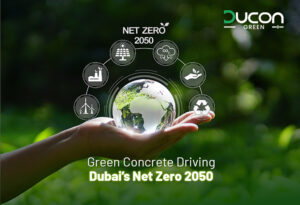
Over the past five years, sustainable construction has shifted from branding to operational necessity.
Developers are now evaluated on:
- Carbon performance
- Waste diversion rates
- Resource efficiency
- Environmental transparency
Green construction materials directly impact all four.
Unlike traditional materials, green building materials are designed to:
- Reduce embodied carbon
- Minimize raw material extraction
- Support circular economy models
- Improve lifecycle performance
In 2026, ignoring green materials increases regulatory and financial risk.
The Shift Toward Sustainable Building Materials in the UAE
The UAE’s construction sector is evolving rapidly.
With national sustainability targets and circular economy initiatives gaining momentum, developers are under increasing pressure to integrate sustainable building materials into project planning.
This includes:
- Recycled aggregates
- Low-impact concrete alternatives
- Locally sourced eco-friendly building materials
- Circular construction materials
Projects that incorporate green materials are better positioned to align with environmental mandates and ESG reporting standards.
Sustainability is no longer a post-design adjustment.
It starts at the material specification stage.
Carbon Is Driving Material Decisions in 2026
Concrete and aggregates account for a significant portion of embodied carbon in construction.
That’s why green building materials are becoming central to carbon strategy.
By incorporating recycled content and reducing dependency on virgin resources, developers can:
- Lower total project emissions
- Improve environmental reporting metrics
- Reduce exposure to future carbon-related regulations
In 2026, carbon efficiency is influencing procurement decisions just as much as price and performance.
Performance Expectations for Green Construction Materials
One of the biggest misconceptions about green materials is that they compromise strength or durability.
That perception is outdated.
Modern green construction materials in the UAE now meet strict technical and quality standards for:
- Road base systems
- Interlocking and paving solutions
- Sub-base layers
- Structural and non-structural applications
With advanced recycling and processing technologies, eco-friendly building materials are engineered for consistency and compliance.
Developers no longer need to choose between sustainability and performance.
Lifecycle Value Over Upfront Cost
The most successful developers in 2026 are shifting from short-term budgeting to lifecycle thinking.
Green building materials offer advantages in:
- Waste reduction
- Regulatory resilience
- Long-term maintenance efficiency
- Asset sustainability positioning
While upfront cost remains important, total lifecycle value is becoming the smarter metric.
Projects built with sustainable building materials are more aligned with long-term regulatory and market expectations.
Circular Construction and Green Materials
Circular construction is reshaping how the industry approaches materials.
Instead of the traditional linear model:
Extract → Build → Demolish → Dispose
Developers are moving toward:
Recover → Reprocess → Rebuild
Green materials play a critical role in this transition.
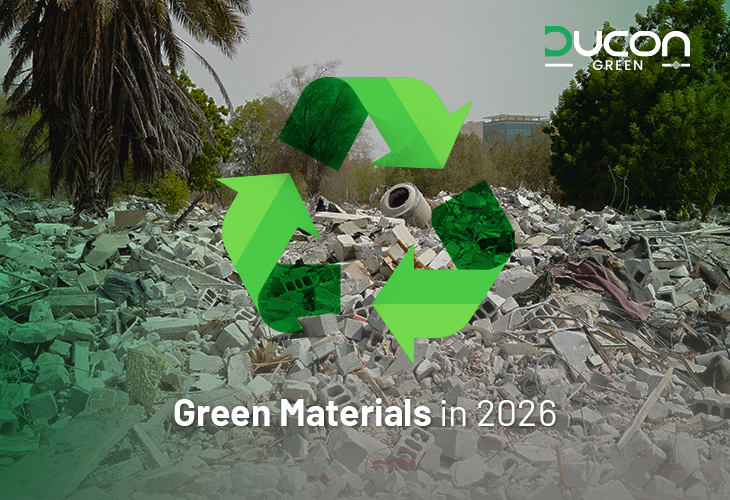
Recycled aggregates and reused mineral-based materials reduce landfill dependency while maintaining construction quality.
In the UAE, where development cycles are continuous, circular material strategies provide measurable environmental and economic benefits.
What This Means for Developers in the UAE
In 2026, green building materials are no longer optional enhancements.
They influence:
- Tender competitiveness
- ESG scoring
- Investor perception
- Government alignment
- Long-term asset performance
Developers who proactively integrate green materials into procurement strategies gain a structural advantage.
Those who delay may face higher compliance pressure and reduced flexibility.

 admin
admin